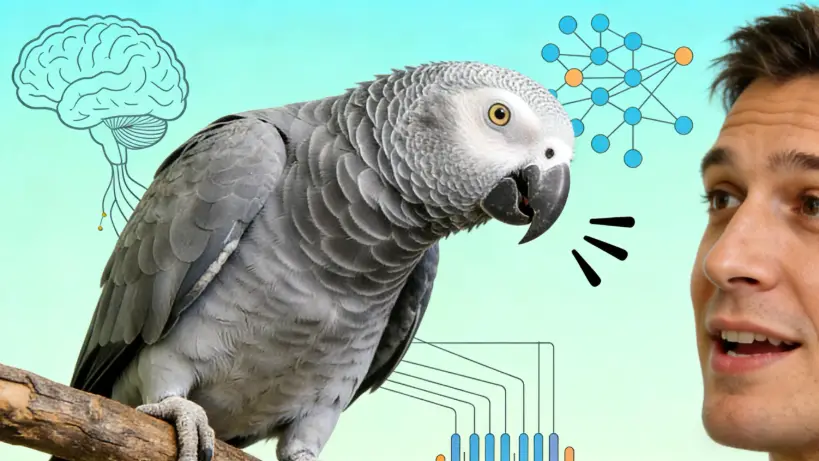

Many people have seen parrots say “Hello” or “Goodbye” and wonder: Why do parrots talk? Do they understand the meaning, or is it just parrot mimicry? Behind parrots talking are the mysteries of parrot vocalization principles (physiology, nerves, evolution). We’ll break down the core logic of parrot vocalization to reveal why parrots can talk and the truth of parrot mimicry.
1. The Core Difference Between Parrots Talking and Humans Speaking
Key Misconception: Parrots talking ≠ understanding. Parrot mimicry is essentially sound imitation—most parrots mechanically repeat human sounds, unlike humans who speak with logic. An exception is the African Grey Parrot (cognitive level of a 4-6 year old), which masters thousands of words and simple abstract concepts, making it a “top student” in parrot mimicry[1][4].
2. Physiological Advantages of Parrots Talking: Syrinx + Flexible Tongue
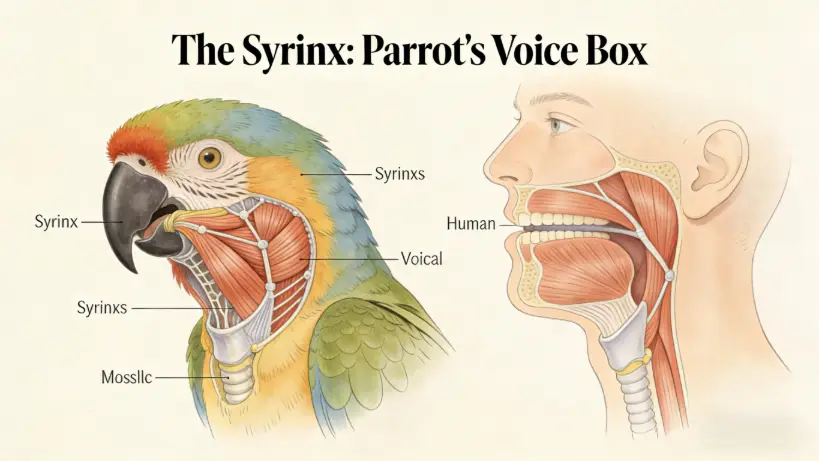
Humans use vocal cords to speak, but parrots don’t. Their ability to talk and do parrot mimicry depends on a “top-tier vocal system”: syrinx + flexible tongue—the core hardware for parrot vocalization principles[5].
✅ Syrinx: The “Biological Synthesizer” of Parrot Vocalization
The syrinx (at the trachea-bronchi junction) has 17 specialized vocal muscles (only 3-5 in ordinary songbirds), precisely regulating airflow to replicate human speech (error ≤3 decibels)[1][4]. Its independent bilateral vibration allows mimicking complex sentences and dialects—core to parrots talking, parrot mimicry, and parrot vocalization principles.
✅ Tongue: The “Precise Tuner” of Parrot Vocalization
Parrots’ thick, smooth tongues with dense nerve endings enable sub-millimeter adjustments[1][4]. Working with the syrinx to control oral resonance, they produce human-like intonation—critical to parrot vocalization principles. Without it, clear parrot mimicry and talking are impossible[5].
3. The Neural Code of Parrot Mimicry: Born with a “Language Center”
A Nature study found budgerigars have a brain structure similar to the human language center[1][4]—the neural core of parrot mimicry and talking. Their forebrain’s AAC has sound neuron clusters encoding speech, with a neural coding mode similar to humans. High FOXP2 gene expression further enhances their parrot mimicry talent.
4. Evolutionary Blessing: Parrot Mimicry is a Survival Skill
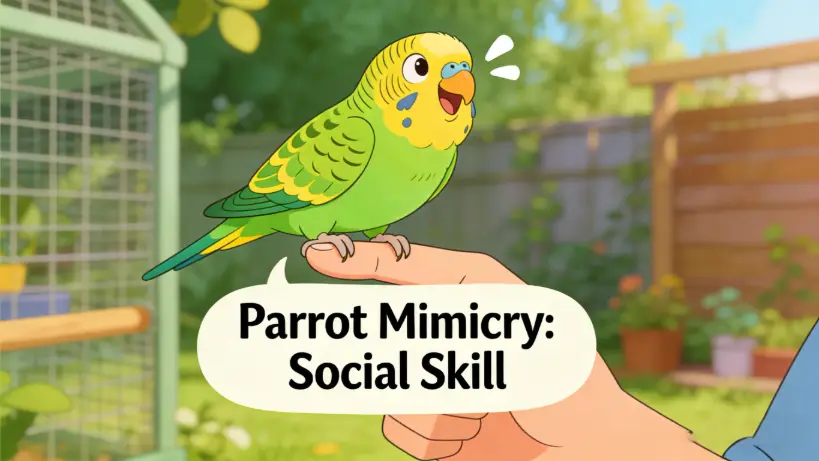
Parrot mimicry and talking are evolved social survival skills, the evolutionary root of parrot vocalization principles. Wild parrots use vocalization to court, claim territories, and connect; mimicry helps them integrate. Domestic parrots mimic owners (their “flock”) to show intimacy[4].
5. Common Misconceptions About Parrots Talking
- ❌ Misconception 1: All parrots can talk—Wrong! Cockatiels/lovebirds rarely do parrot mimicry; budgerigars, African Greys, and Amazons excel at it[2].
- ❌ Misconception 2: Tongue-cutting helps parrots talk—Wrong! It damages parrot vocalization principles, harms parrots, and impairs eating/talking[5].
- ❌ Misconception 3: Expensive parrots talk better—Wrong! Parrot mimicry/talking depends on species, training, and companionship, not price[2].
- ❌ Misconception 4: Recordings teach parrots to talk—Wrong! Parrot mimicry needs emotional connection; recordings alone don’t work[2].
6. Must-Know for Parrot Owners: Frequently Asked Questions About Parrots Talking
For new owners, here are key FAQs about parrots talking, parrot mimicry, and parrot vocalization principles👇
Q1: What is the best age to teach a parrot to talk?
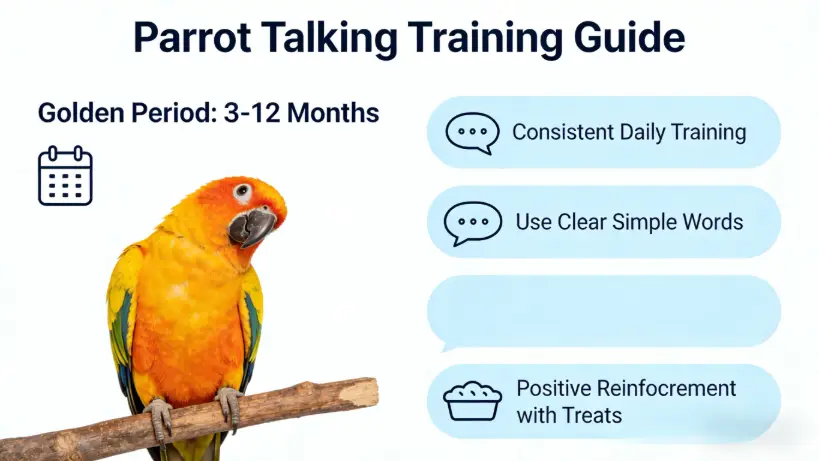
3-12 months old is the golden period for parrot mimicry and talking (best adaptability to parrot vocalization principles). Train 5-10 minutes, 2-3 times a day, in the morning/evening[2][4].
Q2: What is a simple method to teach a parrot to talk?
Use “positive reinforcement”: repeat simple words to guide parrot mimicry. Reward with snacks when it mimics; teach new words after proficiency[2][4].
Q3: Will a parrot forget the words it has learned?
Yes! Parrot mimicry/talking memory fades without review (may forget in 6 months). Repeat learned words daily to strengthen skills[2].
Q4: Is there a big difference in talking ability between different parrot species?
Huge differences: Budgerigars (record: 1,728 words), African Greys (1,000-2,000 words), Sun Conures (10-50 words)—due to parrot vocalization principles and neural differences[2][4].
Q5: Is there a relationship between a parrot’s talking ability and its gender?
Yes! Male parrots of most species are better at parrot mimicry and talking (e.g., higher speaking rate in male Sun Conures), related to physiology and neural development[2].
💡 Conclusion: Parrots talk thanks to parrot vocalization principles, neural talents, and evolution. Parrot mimicry mostly lacks meaning, but it’s how parrots show intimacy.
For owners, patient training and interaction help parrots improve parrot mimicry and talking skills—your parrot could become a “chatterbox”!